2026.04.26
Ayu, often called “sweetfish” in English, is one of Japan’s most beloved river fish. It lives in clear, fast-flowing streams and feeds on algae growing on rocks, which gives its flesh a delicate, slightly sweet flavor. Grilled with salt, ayu is a seasonal delicacy that many Japanese people associate with early summer.
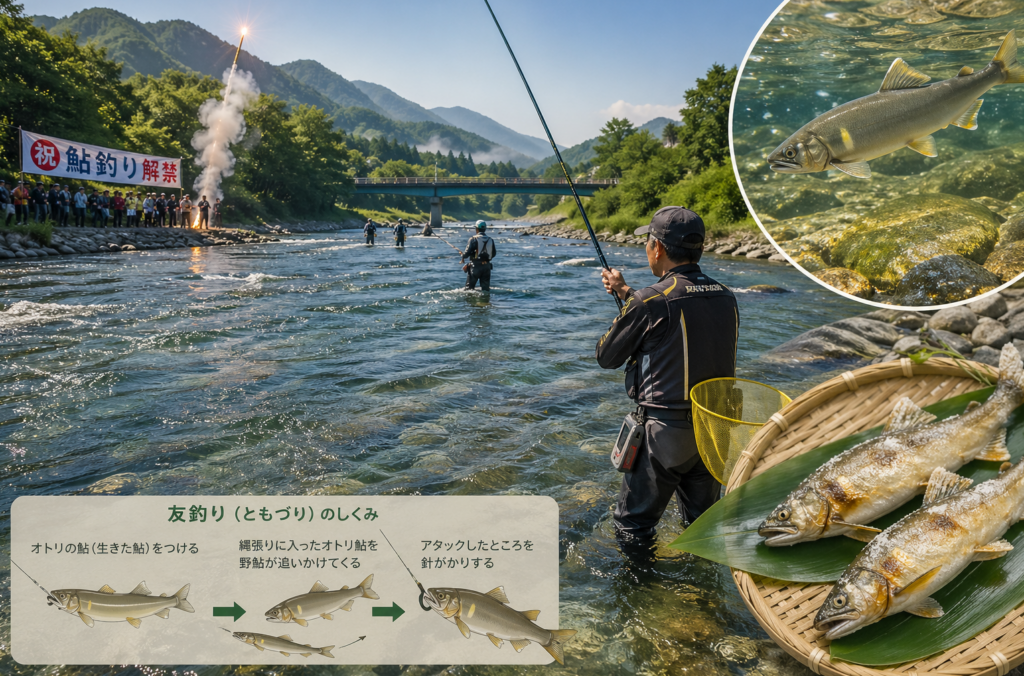
One of the most distinctive methods used to catch ayu is called tomozuri, or “friend fishing.” Instead of using bait, anglers attach a live ayu to their line. Because ayu are territorial fish, they instinctively attack the intruding fish, and in doing so, become hooked. This unique and almost poetic technique reflects a deep understanding of nature and fish behavior, making ayu fishing as much an art as it is a sport.
According to recent news, the ayu fishing season has already begun in the Arakawa River area of Chichibu City, Saitama Prefecture—reportedly the earliest opening in Japan. On April 25, as early morning darkness gave way to light, anglers from across the Kanto and even Tohoku regions gathered along the riverbanks. At 6 a.m., a signal firework marked the official start, and dozens of fishing lines were cast into the flowing water at once.
Some visitors arrived so early because their local rivers do not open until May, and they simply could not wait any longer. Their eyes lit up at the sight of ayu swimming in the clear stream, a sure sign that the season had truly begun.
The opening day was not only about fishing. Nearby riverside areas also hosted outdoor activities such as barbecues, highlighting how Japanese rivers are enjoyed as spaces for both nature and community.
The early start of the ayu season in Chichibu offers a glimpse into Japan’s rich fishing culture—where tradition, technique, and seasonal beauty come together in the gentle flow of a river.
日本の春は、釣り人たちにとって静かでありながら心躍る合図をもたらします。それが、アユ釣りのシーズンの解禁です
アユは英語でしばしば「スウィートフィッシュ」と呼ばれ、日本で最も愛されている川魚の一つです。澄んだ流れの速い川に生息し、岩に付着する藻を食べて育つため、その身にはほのかな甘みと繊細な風味があります。塩焼きにしたアユは初夏の味覚であり、多くの日本人にとって季節を感じさせる存在です。
アユを釣るための最も特徴的な方法の一つが、「友釣り」と呼ばれる技法です。エサの代わりに、生きたアユを釣り糸に付けて使います。アユは縄張り意識の強い魚であるため、侵入してきた魚に本能的に攻撃を仕掛け、その際に針にかかります。この独特でどこか詩的な技法は、自然や魚の習性への深い理解を反映しており、アユ釣りを単なるスポーツではなく一つの芸術にしています。
最近のニュースによると、埼玉県秩父市の荒川流域では、すでにアユ釣りのシーズンが始まりました。これは日本で最も早い解禁とされています。4月25日、夜明け前の暗さが徐々に薄れる中、関東や東北各地から釣り人たちが川岸に集まりました。午前6時、合図の花火が打ち上げられると同時に、一斉に数多くの釣り糸が流れに投げ込まれました。
訪れた人の中には、自分たちの地元の川が5月まで解禁されないため、それまで待ちきれなかったという人もいました。澄んだ流れの中を泳ぐアユの姿に目を輝かせながら、本格的なシーズンの到来を実感していました。
この解禁日は釣りだけではありません。川辺ではバーベキューなどのアウトドア活動も楽しまれ、日本の川が自然と人々の交流の場として親しまれている様子も見られました。
秩父でのアユ釣りの早期解禁は、日本の豊かな釣り文化の一端を示しています。そこには、伝統、技術、そして季節の美しさが、穏やかに流れる川の中で見事に調和しています。